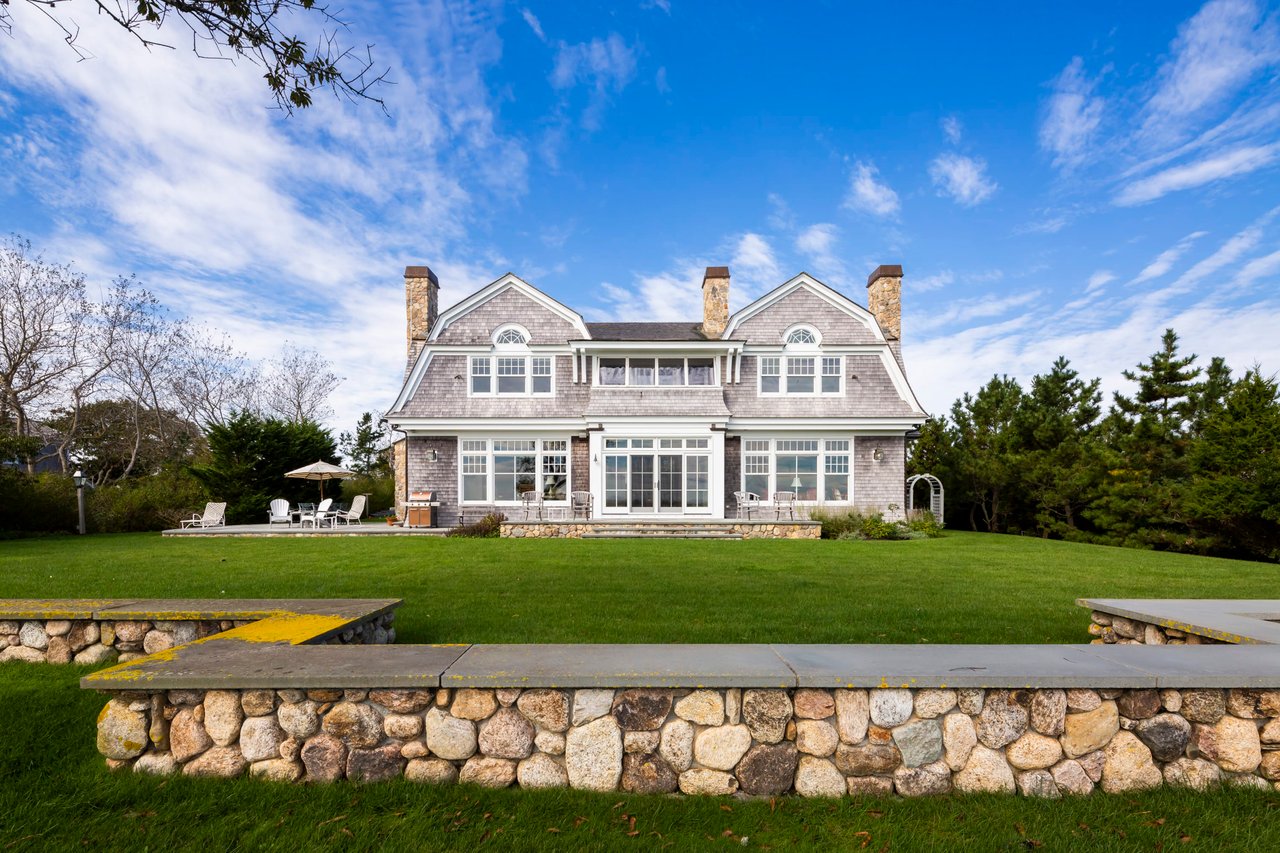
According to the Cape Cod Chronicle, in 2021, a buyer paid $12 million for a Shore Road property in Chatham built around 1800 as a salt box, the Joshua Bearse House. The purchase came with a plan the Chatham Historical Commission had already approved: relocate the old house closer to the road, renovate it, and build new construction farther back on the lot.
Then, during the process of disassembling the structure to move it, known in the trade as flaking, crews took down significant sections, leaving a single wall standing. The town's Building Commissioner issued a stop-work order in September 2025. The owner's attorney later told the Cape Cod Chronicle that if the goal had been to knock the house down, it would have been cheaper to do it on site rather than pay to move it first. The Historical Commission also fined the owner.
The Shore Road case illustrates how an approved plan may still encounter preservation requirements during the work. Chatham has three separate preservation systems, administered by different bodies and triggered by different facts about a property.
Historic District Boundaries and the Age-Based Bylaw
Most people shopping for an old Chatham house pull up the Old Village Historic District boundary, the area bounded by Main and Holway streets to the north, Chatham Harbor to the east, Bridge Street and Bearse's Lane to the south, and Mill Pond to the west. It was listed on the National Register of Historic Places in 2001 and covers roughly 300 properties, about 85 percent of the structures inside it, according to the Old Village Association's own guidelines for owners.
Checking that map answers one question. A renovation timeline also depends on the age of the specific building. Chatham's town-wide Demolition Delay Bylaw, adopted at the May 1997 Annual Town Meeting as Chapter 158 of the town's general bylaws, applies to any building or structure 75 years old or more outside the Historic Business District, whether or not it sits inside the Old Village boundary. Outside the Historic Business District, a Cape house in South Chatham, a fisherman's cottage in Chathamport, or a plain farmhouse nowhere near a mapped district triggers the same notice-of-intent-to-demolish requirement upon reaching that age threshold.
Three Systems, Three Owners
The confusion is understandable, because Chatham's preservation framework did not evolve the way most Cape towns' did. According to the Cape Cod Commission's own historic preservation guidance, Barnstable, Dennis, Eastham, Falmouth, Harwich, Mashpee, and Provincetown all run their local historic districts under Chapter 40C, the state's uniform Historic Districts Act. Chatham did not go that route. Its Historic Business District was created by special legislation, Chapter 641 of the Acts of 1985, a separate law written specifically for Chatham's Main Street commercial corridor. Chatham is also not part of the Old King's Highway Regional Historic District, the special-legislation district that covers Sandwich, Barnstable, Yarmouth, Dennis, Brewster, and Orleans.
The practical effect is that a buyer moving from a Falmouth or Harwich historic district into Chatham cannot assume the process transfers. Here is what actually governs an older Chatham property, depending on where it sits and what it is:
System | Who enforces it | What triggers it | What it covers |
|---|---|---|---|
Chapter 158 Demolition Delay Bylaw | Chatham Historical Commission | Any structure 75+ years old, anywhere in town outside the Historic Business District | Demolition, including partial demolition of exterior walls or roof |
Historic Business District (Ch. 641, Acts of 1985) | Historic Business District Commission (HBDC) | Any exterior alteration, new construction, signage, or demolition on Main Street, as described in the HBDC Design Guidelines and Procedures | Design review, Certificates of Appropriateness, its own demolition and relocation process |
Old Village National Register District | The Cape Cod Commission's guidance describes Commission review alongside Chatham Historical Commission review | National Register-related review may apply | Local and Cape Cod Commission review |
None of these three bodies has authority over the other two. A property inside the Old Village can also be old enough to trigger Chapter 158 independently. A Main Street building answers only to the HBDC's design guidelines, which specify things like wood shingle roofs replaced in kind, brick chimneys that may not be painted without historical precedent, and awnings limited to canvas or canvas-like materials, none of which apply to a house three streets away.
How Commission Approval Fits Into the Process
The details of the Shore Road case show how that can happen. The Historical Commission had signed off on relocating and renovating the Joshua Bearse House. What the commission had not anticipated was that when crews began disassembling the structure, they discovered much of it had actually been renovated back in 2006, and very little of the original historic material remained. The builder acknowledged the error at the commission's October 2025 meeting and said the material would be restored. The fine underscored that the earlier approval did not authorize the work as carried out. Commission chair Frank Messina noted that no demolition delay had been imposed at the outset specifically because there was an agreement in place to preserve the house.
The Cape Cod Chronicle reported a second case involving a 120-year-old house on Stage Harbor Road, illustrating how long this process can run. The commission first placed a 60-day demolition delay on it in December 2022. The project stalled when a special permit request was withdrawn from the zoning board of appeals in early 2023. The house came back before the commission again in October 2025, and this time received a full one-year demolition delay, the second delay imposed on the same building. Commission member Robert Stevens told the Cape Cod Chronicle the street was "very special" and that a new house built in unmatched materials there would be "historically incorrect."
Not every delay ends the same way. The Cape Cod Commission's demolition delay records show that the Solomon Howes House at 68 Shell Drive, with a core dating to around 1700, went through a delay beginning January 2019 that expired in July 2020, and the owners chose to relocate the original structure on site as a guest house rather than lose it. The Caleb Nickerson House took a similar path: the Nickerson Family Foundation eventually paid to move the building by barge, where it now operates as a museum open to the public. Other Chatham properties on the same list did not survive: a house on Bridge Street was lost after a nine-month delay, one on Old Queen Anne Road after twelve months, and two more, on Morris Island Road and Hitching Post Road, after 360-day delays each, with larger new homes built in their place.
The range matters for planning purposes. Across Cape Cod generally, the Cape Cod Commission puts demolition delay periods at six to eighteen months. Chatham's own documented cases run from as short as 60 days to eighteen months, and in at least one instance, twice.
Before You Write an Offer
For a buyer or seller working with an older Chatham property, the due diligence question isn't whether the house sits in "the historic district." It's which system, or which combination of systems, actually governs that parcel.
- Confirm the building's age, in writing if possible. Seventy-five years is the trigger for Chapter 158 outside the Historic Business District.
- Check whether the property falls inside the Historic Business District boundary on Main Street, which answers to the HBDC and its own design and demolition procedures, separate from the town-wide bylaw.
- Check whether the property falls within the Old Village National Register District.
- If any prior renovation work was done without matching permits, get that documented before assuming a commission-approved plan will proceed smoothly. The Shore Road case shows that what's on paper and what's actually standing can diverge.
- Build the demolition delay timeline into your renovation schedule from the outset. Chatham's own history shows it can be as short as two months or as long as eighteen months, sometimes twice.
FAQs
Does a demolition delay always stop a renovation?
No. Several Chatham properties on the delay list were ultimately saved through relocation rather than lost, including the Solomon Howes House and the Caleb Nickerson House. The delay creates time to negotiate alternatives, it doesn't automatically block the project.
Is Chapter 158 only about the Old Village?
No. It applies town-wide to any building 75 years or older, with the specific exception of the Historic Business District, which has its own separate demolition and relocation procedure through the HBDC.
What if my Chatham property isn't old at all?
A newer home outside the Historic Business District generally falls outside all three systems described here. Age and location together determine which rulebook, if any, applies.
Does Chatham's system match other Cape towns?
Not exactly. Falmouth, Harwich, Mashpee, and several other Cape towns run their local historic districts under the state's Chapter 40C. Chatham's Historic Business District was created by its own special legislation, so precedent from those other towns doesn't carry over directly.
If you're evaluating an older Chatham property, whether you're the one selling it or the one trying to picture what you can actually do with it, this is exactly the kind of layered due diligence Paul Grover walks clients through before an offer goes in, not after. Start a confidential conversation to talk through what a specific address actually answers to.
This article is general information, not legal, tax or financial advice. Consult a qualified professional about your situation.