Choosing the right village in Harwich can shape how you experience Cape Cod year-round or seasonally. If you are drawn to Harwich, you are likely weighing more than price or square footage. You are also thinking about walkability, boating access, quiet residential streets, daily convenience, and the kind of setting that fits your lifestyle. This guide will help you compare Harwich’s distinct villages so you can focus your home search with more confidence. Let’s dive in.
Why Harwich Draws Buyers
Harwich is organized around seven villages: East Harwich, Harwich Center, Harwich Port, North Harwich, Pleasant Lake, South Harwich, and West Harwich. Town resources also describe Harwich as a community with 21 beaches and ponds, which helps explain its broad appeal for buyers seeking both coastal and inland settings. According to the town’s community resources page, Harwich has an owner-occupied rate of 84.8% and a median owner-occupied home value of $658,600.
From a housing perspective, Harwich is shaped largely by single-family residential zoning, with town planning documents noting redevelopment near Nantucket Sound that has included smaller homes being replaced by larger houses. For you as a buyer, that means village-by-village differences matter. Some areas feel more compact and walkable, while others are more rural, residential, or oriented around water access.
Harwich Center: Walkability and Civic Life
Harwich Center is the town’s civic core and one of the clearest choices if you want a more traditional village setting. The area is anchored by Town Hall, Brooks Free Library, the First Congregational Church, Brooks Academy Museum and the Harwich Historical Society, Brooks Park, and the Cape Cod Rail Trail, which runs directly through the village.
The village is also known for its historic identity. Local sources describe concentrations of Greek Revival and Italianate architecture, along with winding, tree-lined roads and buildings set close to the street. For buyers, that often translates to a compact, established environment with a strong sense of place.
Who Harwich Center May Suit Best
If you value a year-round village feel, Harwich Center stands out. It is often the best fit for buyers who want:
- Walkable access to civic and cultural landmarks
- A historic setting with traditional village character
- Direct connection to the Rail Trail
- A central location within town
Harwich Port: Harbors, Beaches, and Energy
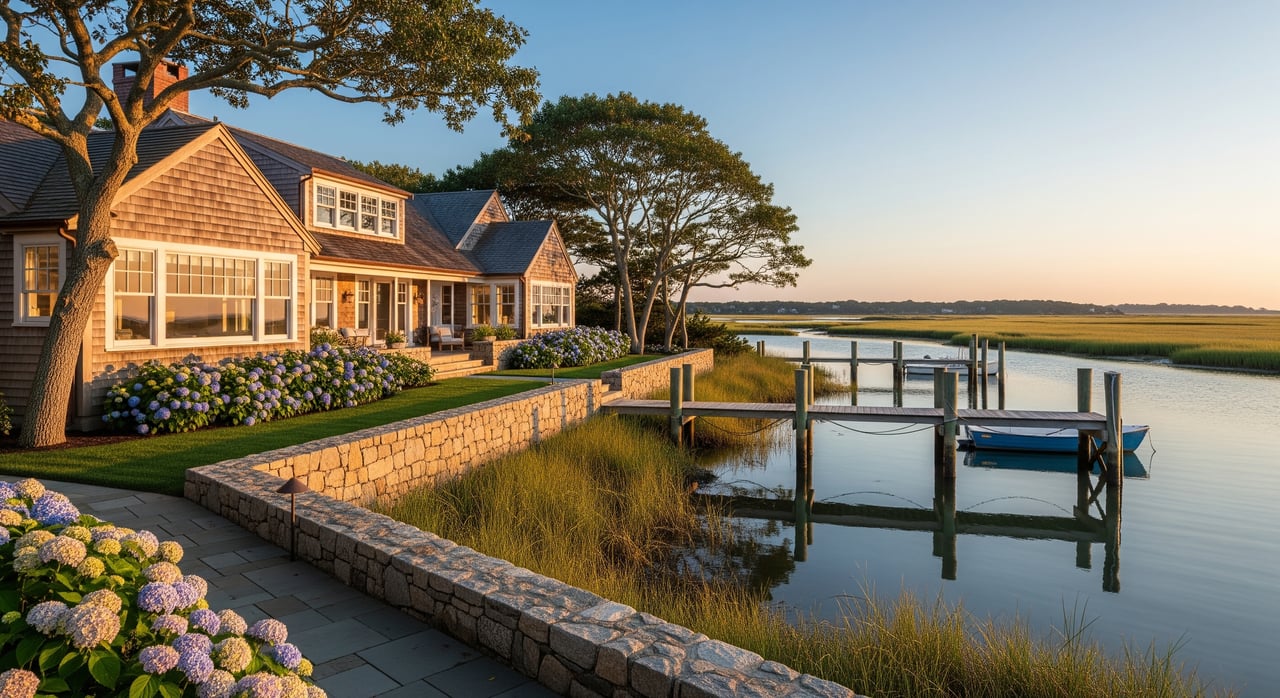
Harwich Port offers the most distinctly mixed-use and waterfront-oriented lifestyle in town. Chamber and town sources describe it as a seaside village with three harbors: Saquatucket, Allen, and Wychmere, along with Nantucket Sound beaches, galleries, shops, and restaurants. If you are looking for activity, water access, and a classic Cape village atmosphere, this is often the first place buyers explore.
Each harbor adds a slightly different dimension. Saquatucket Harbor is described as the Cape’s largest newly renovated municipal marina, with ferry, fishing charter, and seal-cruise access. Allen Harbor is especially boat-oriented, while Wychmere is described as a more luxury-oriented harbor setting.
Housing here reflects that mix. You will find a blend of village-center homes, harbor-adjacent residences, and historic captain’s houses, alongside the classic New England main street pattern of commercial and residential structures.
Who Harwich Port May Suit Best
Harwich Port is often a strong match if you are prioritizing:
- Boating and harbor access
- Proximity to Nantucket Sound beaches
- Shops, dining, and a more active village scene
- A mix of waterfront, historic, and in-village home options
West Harwich: Historic Character and Conservation
West Harwich offers a quieter feel while still keeping you close to salt water and outdoor amenities. Town planning materials describe stately homes set back from Route 28, cottage-lined roads leading toward the water, and historic structures along Depot Street and Riverside Drive that reflect the area’s evolution into Captains’ Row.
The village also stands out for nearby open space. Bell’s Neck Conservation Area, described by the chamber as about 250 acres, is a key local amenity. West Harwich also offers access to the Cape Cod Rail Trail, Chase Library, and nearby Pleasant Road Beach.
Why Buyers Consider West Harwich
If you want a residential setting with a historic feel and outdoor access, West Harwich is worth a close look. It is often a good comparison point for buyers who want:
- Conservation land nearby
- Beach access without the busiest village-center setting
- Historic homes and traditional Cape streetscapes
- A quieter pace with convenient local amenities
South Harwich: Residential and Settled
South Harwich leans more residential and less commercial than some of the other villages. Chamber and town sources highlight Red River Beach, the South Harwich Meetinghouse, and the Hacker Wildlife Sanctuary as signature local features. The town’s open space plan also notes that the village has maintained its residential character and has relatively little commercial development.
Its historic housing pattern includes pre-1900 structures along Route 28 and nearby roads. For you as a buyer, that may make South Harwich appealing if you want a setting that feels established, lower-key, and rooted in residential use rather than retail activity.
Who South Harwich May Suit Best
South Harwich may be the right fit if you are looking for:
- A quieter residential environment
- Access to Red River Beach and natural areas
- Limited commercial activity nearby
- A village with a settled, long-standing character
East Harwich: Convenience and Road Access
East Harwich is the town’s main convenience and retail node. Chamber materials describe it as a thriving economic area with Stop & Shop, Dunkin, CVS, the town’s largest post office, and family-owned businesses. Town planning documents add that the Route 39 and 137 intersection includes larger retail uses such as supermarkets, lumber yards, hardware stores, drive-thru banks, and smaller boutiques and restaurants.
This village also includes year-round residential communities, scenic roads near Pleasant Bay, and pre-1900 homes along Pleasant Bay Road, Route 39, and Church Street. If your priority is ease of errands and practical day-to-day access, East Harwich offers a very different experience from the more harbor-focused or village-center-focused parts of town.
Why East Harwich Appeals to Buyers
East Harwich is often best for buyers who prioritize:
- Everyday retail convenience
- Access to major local roads
- Year-round residential neighborhoods
- A balance of practical amenities and scenic pockets
North Harwich: Rural and Low-Density
North Harwich has the most rural and agricultural identity among the villages covered here. Chamber and town sources describe cranberry bogs, horses, open space, active bogs, a historic Cape Verdean community, Bell’s Neck Conservation Area, Sand Pond, and clusters of pre-1900 structures. The overall pattern suggests a lower-density setting with fewer cues of a concentrated village center.
Sand Pond is one of the village’s notable local amenities. It is described as a public swimming area with calm water, soft sand, scenic views, lifeguards, and parking, which adds a strong recreational draw for inland buyers.
Who North Harwich May Suit Best
North Harwich may be a strong fit if you want:
- A more rural setting
- Open space and cranberry bog landscapes
- Access to Sand Pond and conservation land
- Lower-density housing patterns
Pleasant Lake: Inland and Pond-Centered
Pleasant Lake is Harwich’s most pond-centered inland village. It is bordered by Long Pond, Hinckley’s Pond, and Seymour Ponds, and the chamber describes it as a peaceful rural community of cranberry bogs and residential homes with access to swimming, fishing, and kayaking. If your idea of Cape Cod living is more inland and nature-oriented, Pleasant Lake deserves attention.
Town materials add that fewer than 25 pre-1900 homes are scattered along Pleasant Lake Avenue and Queen Anne Road, and that the old railroad layout is now a bike path. The Pleasant Lake General Store remains a village centerpiece, and Cape Cod Regional Technical High School is located in the village.
Why Buyers Look at Pleasant Lake
Pleasant Lake often appeals to buyers who want:
- Pond access and inland recreation
- A low-density residential setting
- Rural character with a neighborhood focal point
- A quieter alternative to the harbor villages
A Quick Village Comparison
If you are narrowing your search, this summary can help:
- Harwich Center: Best for walkability and civic life
- Harwich Port: Best for boating, harbors, beaches, and a more active mixed-use scene
- West Harwich: Best for historic character, conservation land, and nearby beach access
- South Harwich: Best for a quieter residential setting
- East Harwich: Best for errands, convenience, and road access
- North Harwich: Best for rural, open-space-oriented living
- Pleasant Lake: Best for pond-focused inland living
How To Choose the Right Harwich Village
The best village for you depends on how you plan to live in the home. If you want to walk to local destinations and enjoy a more traditional village core, Harwich Center may be the natural starting point. If your lifestyle centers on boating, beach days, and harbor activity, Harwich Port may rise to the top.
If privacy, open space, or a more relaxed residential feel matter more, West Harwich, South Harwich, North Harwich, and Pleasant Lake each offer a different version of that experience. East Harwich is often the practical choice for buyers who want easier access to shopping, services, and daily conveniences.
In a market like Harwich, subtle differences between villages can have a meaningful effect on your experience of the property over time. That is why a focused, village-level search can be just as important as the home itself.
If you are considering a purchase in Harwich and want thoughtful guidance on which village best aligns with your goals, Paul Grover offers discreet, high-touch advisory tailored to Cape Cod buyers seeking the right fit for both lifestyle and long-term ownership.
FAQs
What are the seven villages in Harwich for homebuyers?
- Harwich is organized around East Harwich, Harwich Center, Harwich Port, North Harwich, Pleasant Lake, South Harwich, and West Harwich.
Which Harwich village is best for walkability?
- Harwich Center is generally the best fit for buyers who want walkability, civic landmarks, and a compact village setting.
Which Harwich village is best for boating and harbor access?
- Harwich Port is the clearest choice for boating and harbor activity because it includes Saquatucket, Allen, and Wychmere harbors.
Which Harwich village is best for quiet residential living?
- South Harwich is often a strong option if you want a quieter, more residential setting with limited commercial development.
Which Harwich village is best for daily convenience?
- East Harwich is typically the best fit for buyers who prioritize shopping, services, and road access for everyday errands.
Which Harwich villages are most rural or inland?
- North Harwich and Pleasant Lake are the most rural and inland-oriented options, with open space, ponds, cranberry bogs, and lower-density housing patterns.