If your idea of a Cape Cod escape includes more than a single beach town center, Falmouth stands apart. You get a coastal town shaped by eight distinct villages, each with its own rhythm, waterfront access, and daily routine. Whether you picture ferry rides, harbor views, Main Street errands, or mornings on the bikeway, Falmouth offers several ways to settle into the Cape. Let’s take a closer look.
Why Falmouth Feels Different
Falmouth sits on the southwest corner of Cape Cod and reads less like one compact town and more like a collection of connected coastal places. According to local sources, it includes eight villages: East Falmouth, Falmouth, Hatchville, North Falmouth, Teaticket, Waquoit, West Falmouth, and Woods Hole.
That structure matters when you are choosing where to spend time or where to focus your home search. Falmouth also has 68 miles of shoreline, 10 public beaches, and a network of harbors that support everyday marine activity. The result is a town where the setting shifts as you move from village to village.
Falmouth Village: The Everyday Hub
Falmouth Village is the town’s civic and commercial center. It is where you find Main Street, the Village Green, the public library, and a concentration of shops, restaurants, and cultural stops that shape the town’s daily flow.
The village’s layout reflects a long history. Main Street dates to 1687, and the area became the town’s economic center by the early 19th century before later evolving as a summer destination. Today, that history gives the center of town a lived-in, walkable feel that blends errands, dining, and community activity.
If you want a Cape Cod retreat with easy access to daily conveniences, Falmouth Village often feels like the practical heart of town. It supports a lifestyle where a beach visit, a stop at the library, and an evening dinner can all fit into the same simple routine.
Woods Hole: Harbor Energy and Ferry Access
Woods Hole offers a very different side of Falmouth. It is defined by harbor activity, ferry traffic, waterfront businesses, galleries, and major scientific institutions, including NOAA Fisheries, the Marine Biological Laboratory, the Sea Education Association, and the Woods Hole Oceanographic Institution.
This is not a purely resort-oriented village. Woods Hole feels active and maritime, with a working waterfront identity that is part of everyday life. It is also the year-round ferry gateway to Martha’s Vineyard through the Steamship Authority, with a crossing of about 45 minutes.
For many people, Woods Hole captures a special kind of Cape Cod escape. You can move between village streets, the harbor, and the ferry docks in a way that feels connected to both local life and the wider region.
West Falmouth: Scenic and Unhurried
West Falmouth has a different texture again. Town records describe it as a linear district along Route 28A with residential, commercial, institutional, and agricultural land still in use.
Its historic roots include Quaker settlement, fishing, agriculture, and small-scale industry. Over time, the railroad and proximity to Buzzards Bay added to its appeal as a summer destination. Today, the area is often understood as one of the more landscape-driven parts of Falmouth, with a strong trail-and-beach atmosphere.
If your version of a Cape retreat leans quieter and more scenic, West Falmouth is often part of that conversation. It offers a setting where natural surroundings play a larger role in the daily experience.
North Falmouth and Quissett: Tucked-Away Coastal Living
North Falmouth is described in town materials as a linear, semi-rural village along Old Main Road. Its built character includes houses, barns, and a smaller mix of commercial and institutional buildings.
Like many parts of Falmouth, it evolved over time from agricultural roots to include maritime influence and summer tourism. That layered history helps explain why North Falmouth can feel more spread out and tucked away than the center of town.
Quissett adds another coastal layer. Developed around protected harbor waters, it later became a summer colony with large cottages and harbor-oriented institutions such as the Quissett Yacht Club and Quissett Harbor House. Together, North Falmouth and Quissett help define a slower, more sheltered side of Falmouth.
Beaches Shape the Daily Rhythm
In Falmouth, beaches are not just occasional destinations. They help shape the structure of the day, especially in summer. The town maintains and staffs 10 beaches, manages resident and non-resident beach stickers, and runs swimming lessons and lifeguard training.
Summer beach use follows a clear schedule. Lifeguards are generally on duty from 9 a.m. to 5 p.m., beach lots close by evening, and dogs are not allowed on public beaches from May 1 through October 1. That creates a rhythm built around morning arrivals, daytime swimming windows, and evening departures.
Different beaches also support different routines. Surf Drive fits naturally into a Falmouth Village day, while Old Silver Beach is widely noted for white sand, warm waters, and tide pools. Chapoquoit is often associated with sunset views. Rather than one signature beach experience, Falmouth offers several versions of the coastal day.
Harbors Are Part of Daily Life
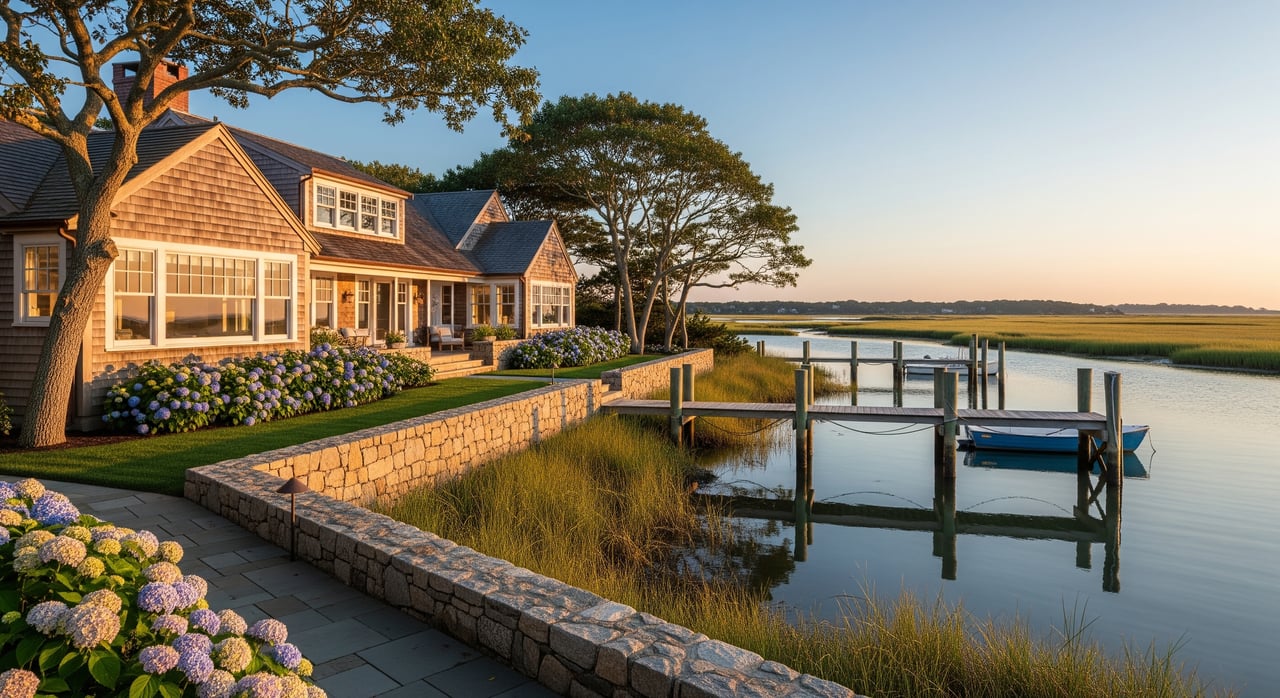
Falmouth’s waterfront is more than scenic backdrop. The town’s Marine and Environmental Services Department oversees 14 harbors, about 70 miles of coastline, and roughly 3,000 moorings.
That level of marine infrastructure helps explain why boating and harbor access feel built into the town’s identity. In Falmouth, the waterfront is not separate from local life. It is part of how the town functions.
For buyers considering a seasonal or long-term coastal property, that distinction matters. Harbor access, moorings, and navigable waterways are not side notes here. They are central to how many people experience the area.
The Shining Sea Bikeway Connects It All
One of the clearest expressions of Falmouth’s retreat lifestyle is the Shining Sea Bikeway. The town describes it as a 10.7-mile route running from Woods Hole to North Falmouth along a former railroad bed.
You can use it for cycling, walking, jogging, skating, and even cross-country skiing. It is also the only bikeway on Cape Cod that runs alongside the sea, which makes ordinary movement feel especially scenic.
The bikeway does more than provide recreation. It connects villages and changes how you experience the town. For some households, it becomes part of a lighter-car routine shaped by trail access, village stops, and waterfront views.
Culture Adds Depth to the Escape
Falmouth’s appeal goes beyond beaches and boating. Cultural life is anchored in both Falmouth Village and Woods Hole, giving the town a sense of year-round identity.
In the village center, the Main Library at 300 Main Street, the Village Green, Falmouth Museums on the Green, and the Katharine Lee Bates statue all contribute to a civic and cultural core. These places help create a routine that feels grounded and local rather than purely seasonal.
Across town, the Falmouth Cultural Council supports arts, humanities, sciences, and community programming. Woods Hole also hosts one of the area’s standout events, the Woods Hole Film Festival, an annual eight-day independent film festival held from the last Saturday in July through the first Saturday in August.
That mix gives Falmouth a layered identity. You can enjoy a place that feels scenic and relaxed while still offering a strong sense of community life.
Choosing the Right Village Feel
If you are comparing parts of Falmouth, it helps to think less about ranking villages and more about matching a setting to your routine. Each part of town supports a different version of the Cape Cod experience.
Here is a simple way to think about it:
- Falmouth Village suits those who value Main Street access, errands, dining, and a central in-town rhythm.
- Woods Hole appeals to those drawn to ferry access, harbor activity, and a working waterfront atmosphere.
- West Falmouth often feels more scenic and landscape-oriented, with a strong beach-and-trail presence.
- North Falmouth and Quissett offer a more tucked-away, semi-rural, or sheltered harbor feel.
For many buyers, that is the real appeal of Falmouth. You are not choosing one generic Cape setting. You are choosing the version of coastal living that best fits how you want to spend your time.
A Thoughtful Coastal Perspective
Any conversation about waterfront living in Falmouth should also include stewardship. Town coastal resilience materials note that beaches, dunes, embayments, fish runs, shellfish habitat, roads, and bridges face ongoing risks from sea-level rise, flooding, storm surge, and erosion.
That does not diminish the town’s appeal. It simply reflects the reality of owning, enjoying, and caring for property in a coastal environment. In a place like Falmouth, long-term value is closely tied to understanding both the beauty of the shoreline and the responsibility that comes with it.
If you are considering a home in Falmouth, the right guidance can help you look beyond the postcard view and understand how each village truly lives day to day. To start a confidential conversation about coastal homes, village lifestyles, and long-term property stewardship, connect with Paul Grover.
FAQs
What is the difference between Falmouth Village and Woods Hole?
- Falmouth Village is the town’s downtown civic and commercial core, while Woods Hole is centered on the harbor, ferry service, waterfront businesses, and science institutions.
Which Falmouth villages feel quieter for a Cape Cod escape?
- West Falmouth, North Falmouth, and Quissett are often understood as calmer or more tucked-away parts of town, based on the town’s descriptions of their landscape, harbor, and semi-rural character.
What makes Falmouth feel like a true Cape Cod retreat?
- Falmouth combines beaches, harbors, ferry access, the Shining Sea Bikeway, Main Street activity, and cultural landmarks in a way that feels both scenic and lived-in.
How many beaches and villages are in Falmouth?
- Falmouth includes eight villages and the town maintains and staffs 10 public beaches.
How does the Shining Sea Bikeway fit into daily life in Falmouth?
- The 10.7-mile bikeway connects Woods Hole to North Falmouth and supports cycling, walking, jogging, and other everyday recreation, making it an important part of how many people move through town.